LOBA Finalist Tomas van Houtryve: Lines and Lineage Photo-Essay
Last September, the prestigious Leica Oskar Barnack Awards 2019 took place in Berlin and we featured two of the finalists in Client US13 for their outstanding b/w photography essays. Here is the work of Tomas Van Houtryve, with descriptions of each photograph below each image.
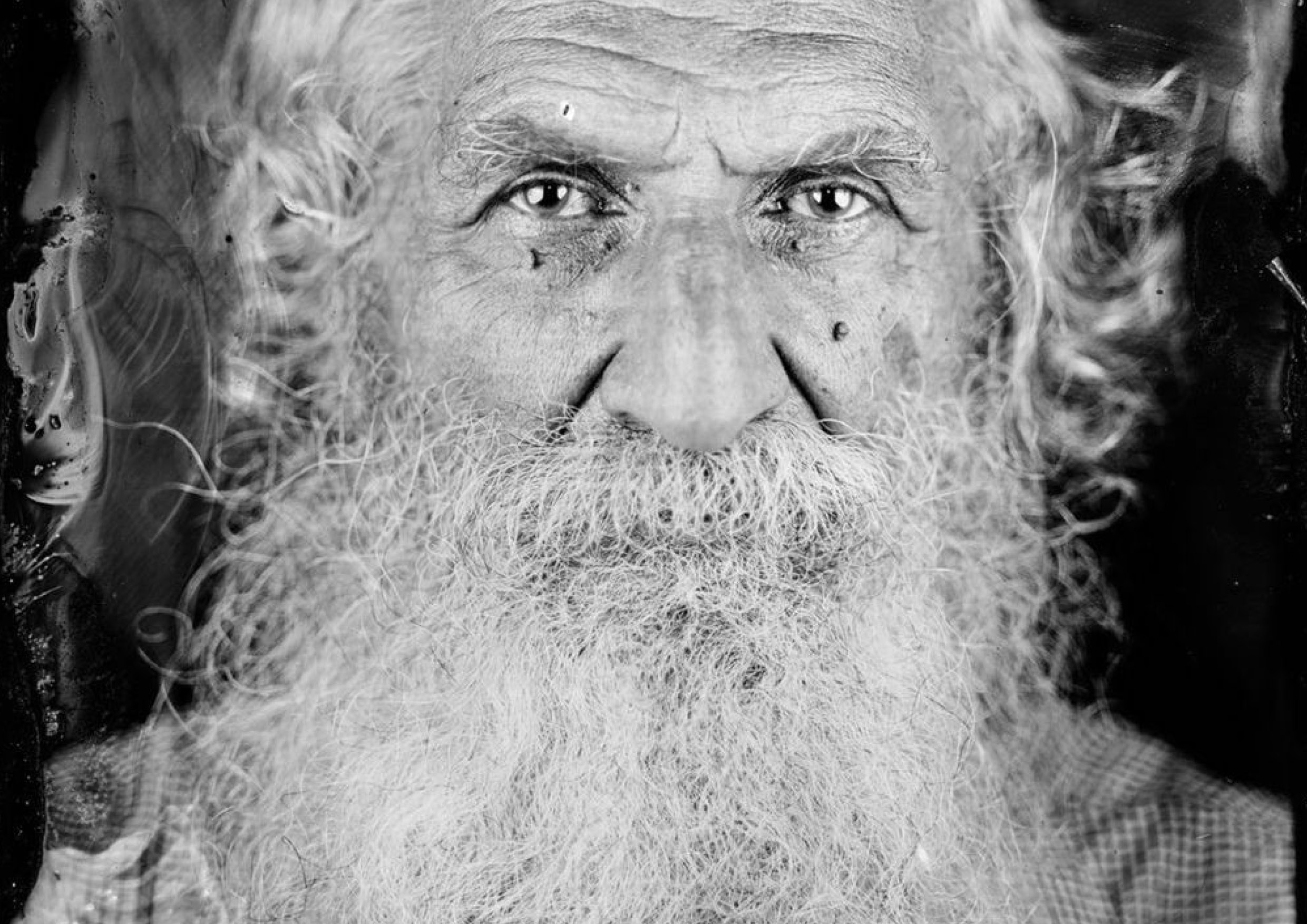
Tomas van Houtryve was born in Belgium and works as a photographer, conceptual artist and author, winning various international awards. In American history, before 1848, Mexico ruled the American West yet this has not been well documented by photographic essays from that time. Tomas van Houtryve used his series titled Lines and Lineage to try to address that in his own way.
You can order a copy of Client Magazine US13 both print and digital editions from the links below.
Buy: Print & Digital Editions*
eBook Bundle: Issues 1-12 for just £6
A book from this series titled ‘Lines and Lineage’ is available. Visit www.tomasvh.com
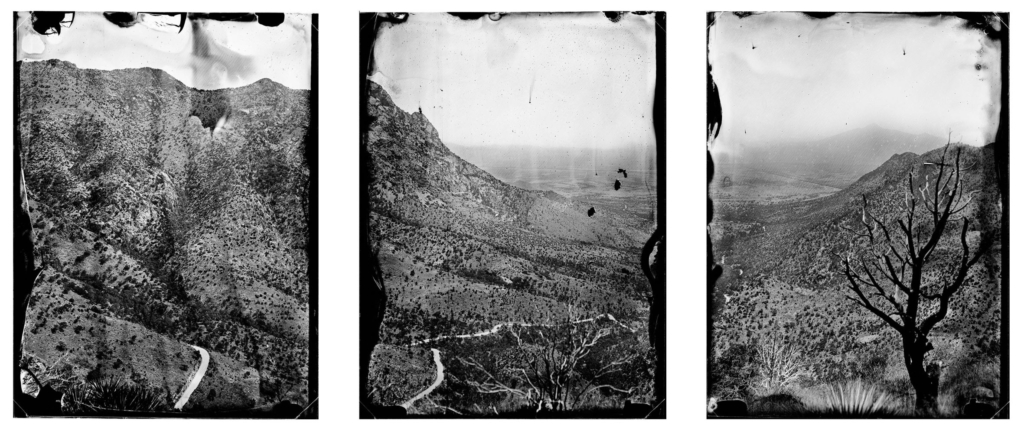
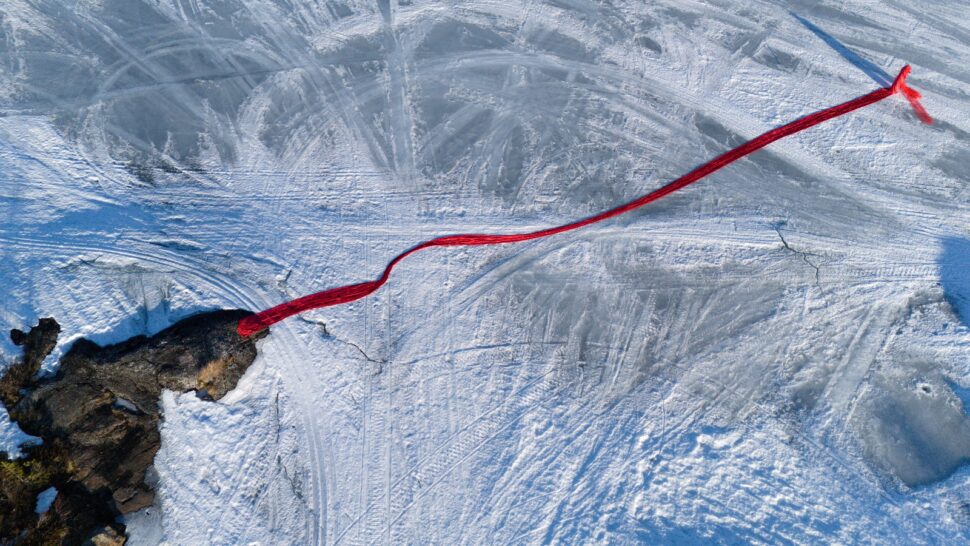
In the year 1540, eighty years before the Mayflower landed at Plymouth, Francisco Vasquez de Coronado and his expedition of hundreds of Spanish and indigenous people entered what is now the United States at this remote spot in Arizona, initiating centuries of Hispanic rule and cultural influence in the Southwest. In 1848, the U.S. military seized half of Mexico’s land and drew the contemporary border. Today, a barrier wall cuts through this same landscape, a deterrent for Hispanic migrants seeking to enter the U.S.
. . . . .
Coronado Entrada and Border Wall, 2018
Triptych gelatin silver prints
40 × 30 cm each (16 x 12 inches each) mounted combined size 106 x 48 cm (42 x 19 inches)
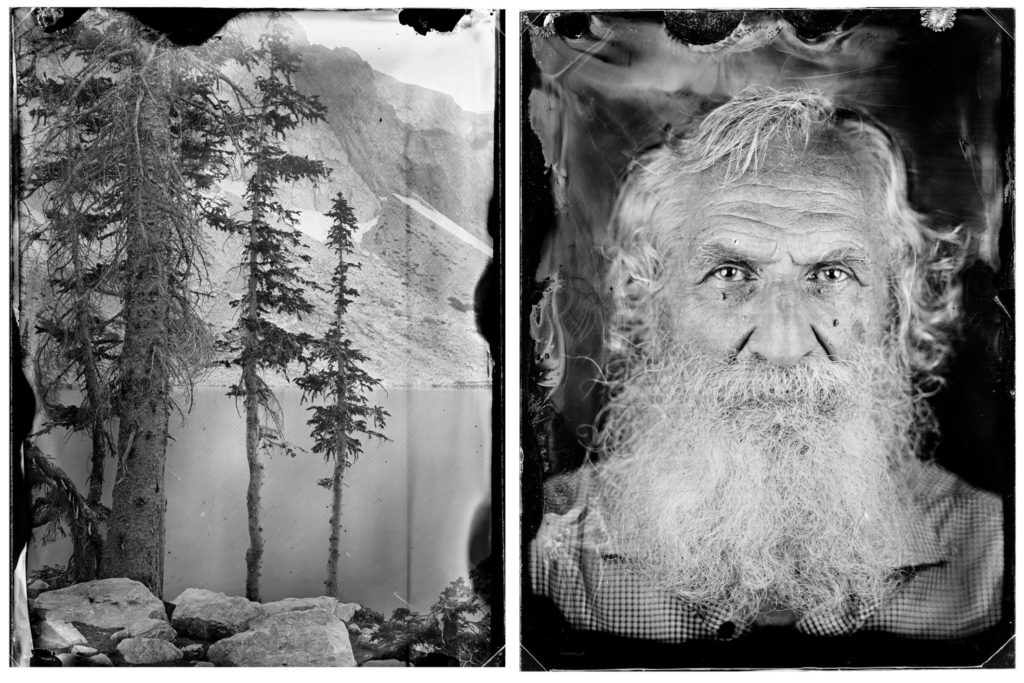
Lake Marie
Near the early-nineteenth-century border between Alta California, Mexico, and unorganized territory of United States.
…
Dorian Wayne Carranza
A descendant of the Spanish settlers that in 1774 started the community that would become the city of San Francisco.
. . . . .
Lake Marie and Dorian Wayne Carranza, 2017
Diptych gelatin silver prints
40 × 30 cm each (16 x 12 inches each) mounted combined size 60 x 40 cm (32 x 24 inches)
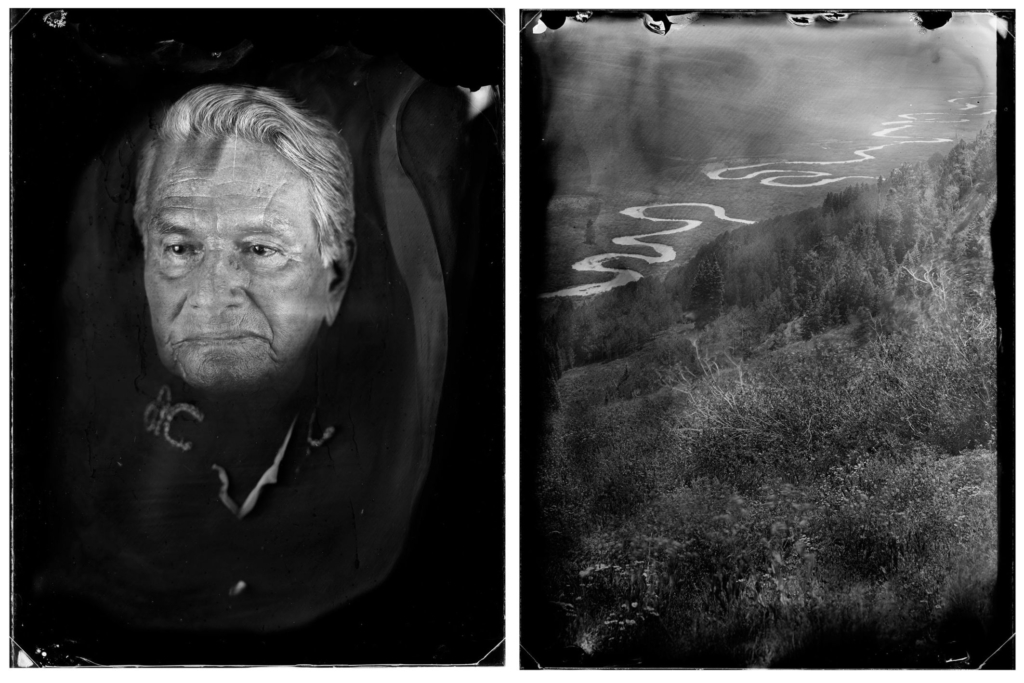
Patrick Garcia
A descendant of Mariano Guadalupe Vallejo, a Mexican general who was taken hostage at the start of the Bear Flag Revolt that ended Mexican rule of Alta California.
…
East River
Near the early 19th century border of Santa Fe de Nuevo México and unorganized territory of the U.S.
. . . . .
Patrick Garcia and East River, 2017
Diptych gelatin silver prints
40 × 30 cm each (16 x 12 inches each) mounted combined size 60 x 40 cm (32 x 24 inches)
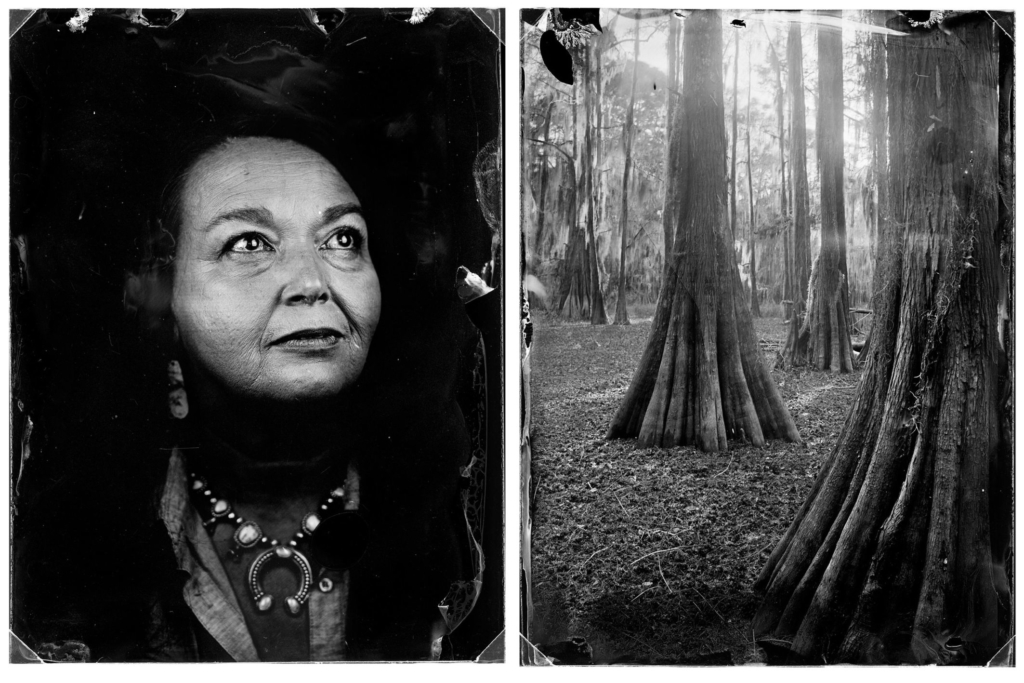
Bernadette Therese Ortiz Peña
A descendant of Crypto Jews, Sephardic families that fled the Inquisition in Spain during the 16th and 17th centuries and eventually migrated to New Mexico. These Jewish families were possibly the first refugees in the history of North America.
…
Carter Lake
Near the early 19th century border between Texas, Mexico, and Louisiana, U.S.
. . . . .
Bernadette Therese Ortiz Peña and Carter Lake, 2017
Diptych gelatin silver prints
40 × 30 cm each (16 x 12 inches each) mounted combined size 60 x 40 cm (32 x 24 inches)
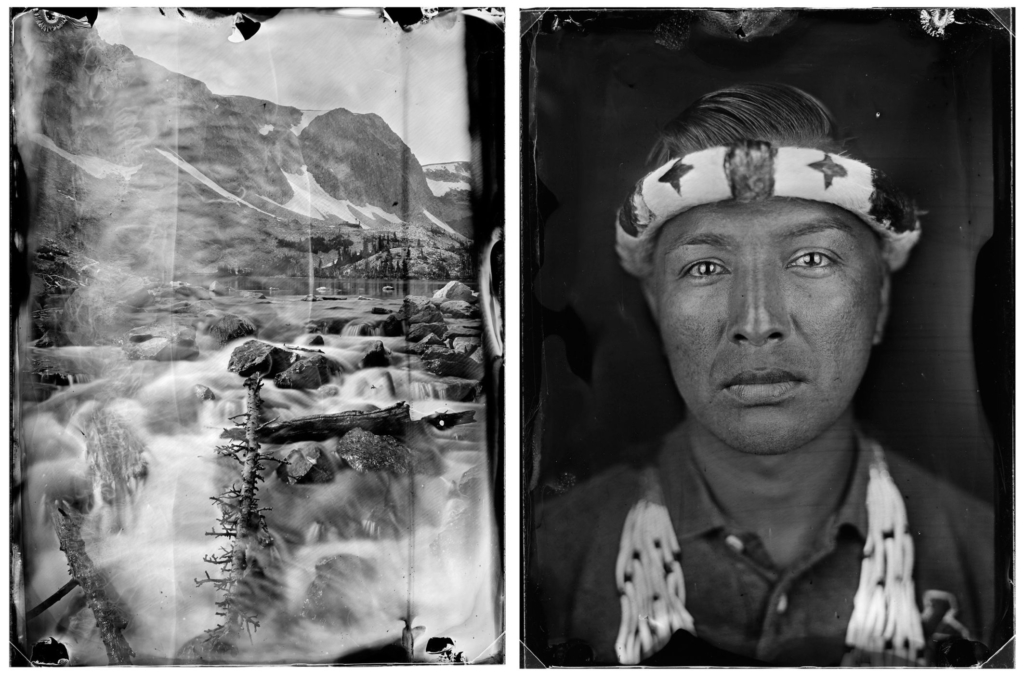
Medicine Bow Peak
Near the early 19th century border between Alta California, Mexico, and the U.S.
…
Ralph Peters III
A member of the Hupa tribe. After the U.S. conquest of California in 1846, extermination campaigns reduced the indigenous population from 150,000 to 30,000 in less than 30 years.
. . . . .
Medicine Bow Peak and Ralph Peters III, 2017
Diptych gelatin silver prints
40 × 30 cm each (16 x 12 inches each) mounted combined size 60 x 40 cm (32 x 24 inches)
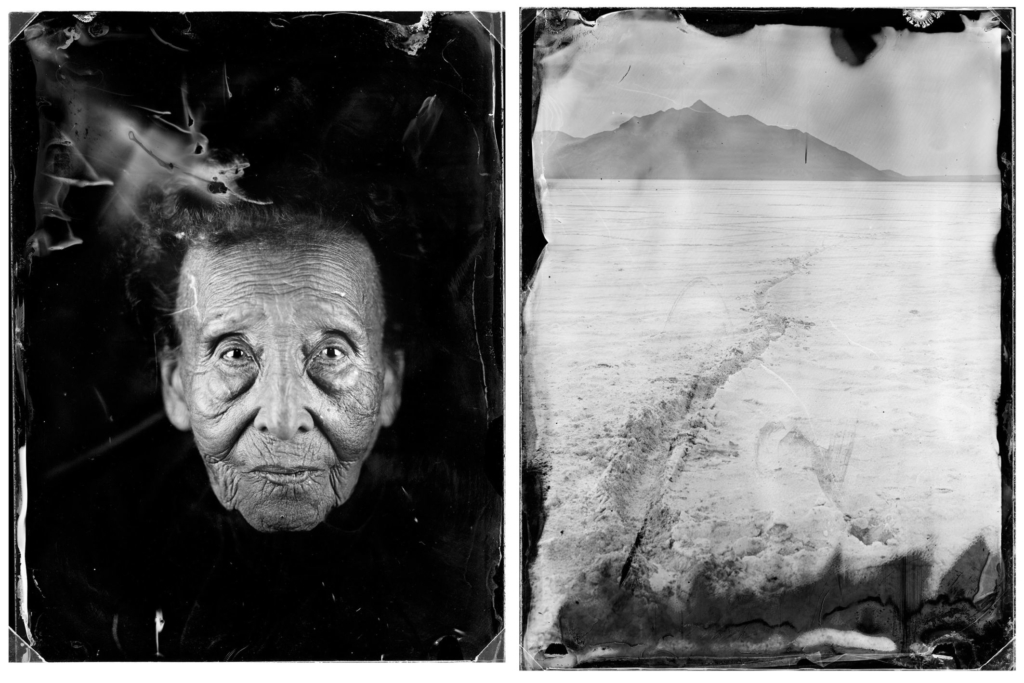
Anna Maria Gallegos de Houser
She was born in 1912, the year New Mexico became a U.S. state.
…
Bonneville Salt Flats
Near the early 19th century border between the Mexican territory of Alta California and Oregon Country, which was jointly claimed by the United States and Great Britain.
. . . . .
Anna Maria Gallegos de Houser and Bonneville Salt Flats, 2017
Diptych gelatin silver prints
40 × 30 cm each (16 x 12 inches each) mounted combined size 60 x 40 cm (32 x 24 inches)
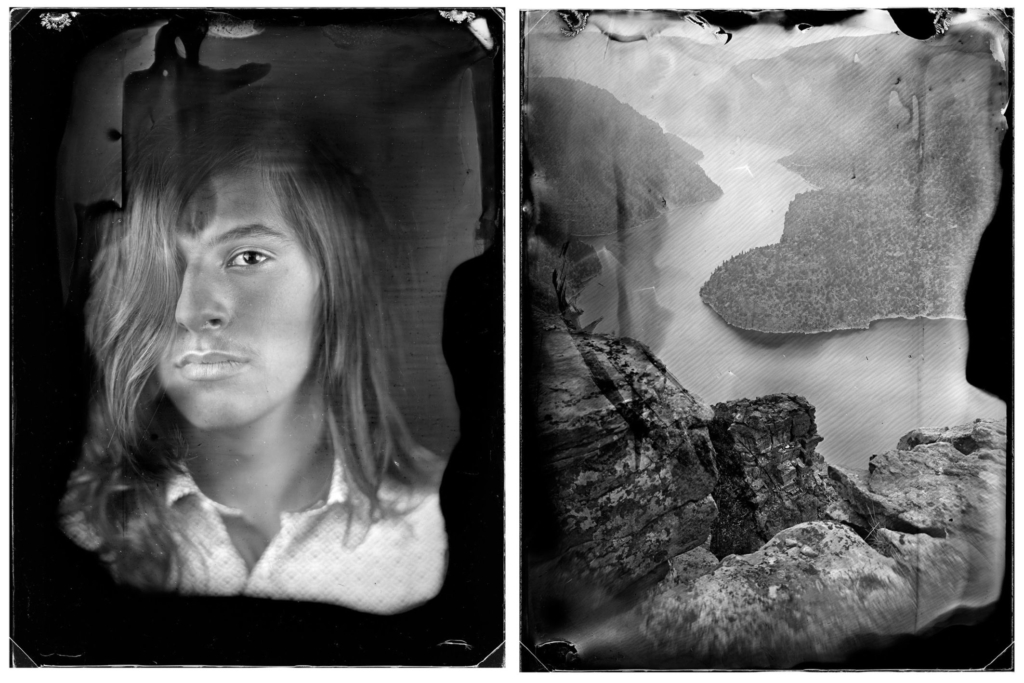
Nathan Alexander Steiner
A relative of Pío Pico, the last Mexican governor of California. Pico was of mixed African, native and Spanish ancestry. After U.S. conquest, non-whites were stripped of their rights.
…
Green River
Near the early 19th century border of Alta California, Mexico and the U.S.
. . . . .
Nathan Alexander Steiner and Green River, 2017
Diptych gelatin silver prints
40 × 30 cm each (16 x 12 inches each) mounted combined size 60 x 40 cm (32 x 24 inches)
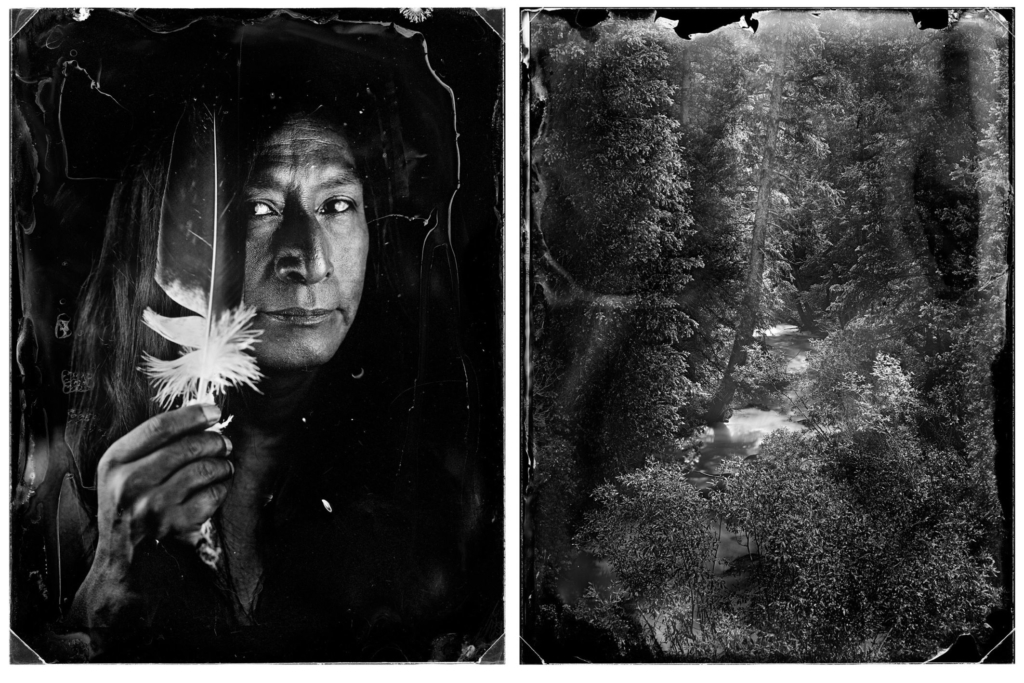
Gomeo Zacharias Bobelu
…
Chalk creek
Near the early-nineteenth-century border of Santa Fe de Nuevo México and unorganized territory of United States.
. . . . .
Gomeo Zacharias Bobelu and Chalk creek, 2017
Diptych gelatin silver prints
40 × 30 cm each (16 x 12 inches each) mounted combined size 60 x 40 cm (32 x 24 inches)
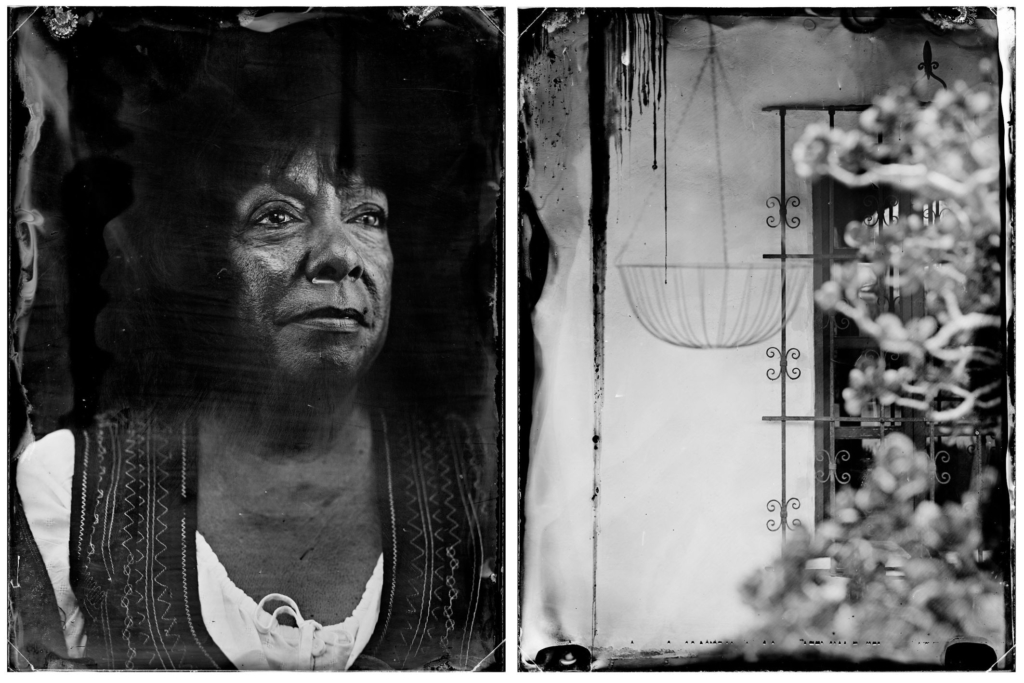
Susan Calderon Bellman
A descendant of Luis Manuel Quintero, one of the founders of the Pueblo de la Reyna de los Angeles, who was listed on the 1781 population register as a 55-year old black man. Of the 44 original settlers who founded what is now called the city of Los Angeles, only two were white. The others all had degrees of African and indigenous heritage.
…
Andres Pico Adobe
One of very few surviving buildings in the Los Angeles area constructed during California’s period of Mexican rule.
. . . . .
Susan Calderon Bellman and Andres Pico Adobe, 2018
Diptych gelatin silver prints
40 × 30 cm each (16 x 12 inches each) mounted combined size 60 x 40 cm (32 x 24 inches)
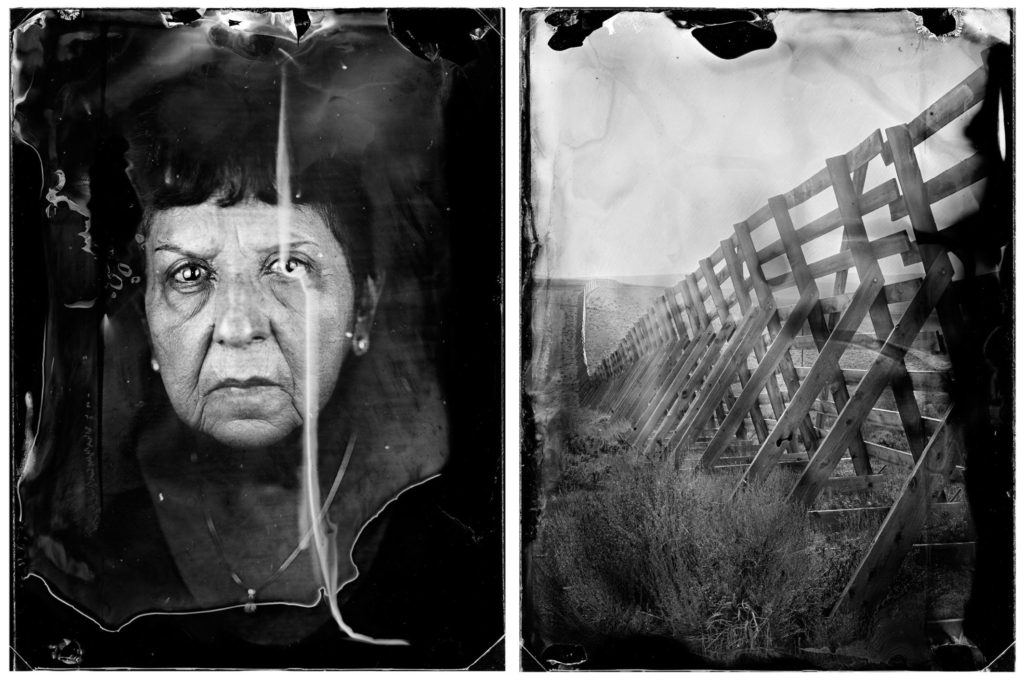
Dorothy Mary Gallegos
…
Snow fence, Saratoga
Near the early-nineteenth-century border of Mexico and unorganized territory of the United States.
. . . . .
Dorothy Mary Gallegos and Snow fence, Saratoga, 2017
Diptych gelatin silver prints
40 × 30 cm each (16 x 12 inches each) mounted combined size 60 x 40 cm (32 x 24 inches)
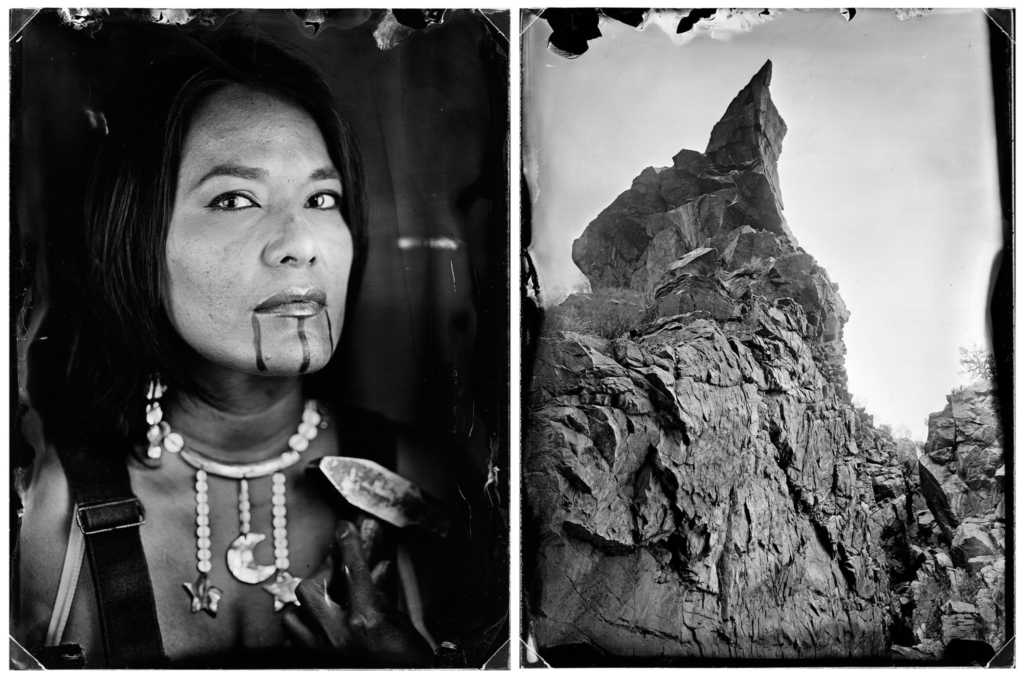
Liz Wallace
Her indigenous ancestors were enslaved by John Sutter, a German-born migrant to Alta California who naturalized as a Mexican citizen in 1840 so that he could obtain a land grant. In 1846, Sutter supported the Bear Flag Revolt and used his land as a headquarters to for the anti-Mexican rebels.
…
Arkansas River cliffs
The river was the early-nineteenth-century border of Santa Fe de Nuevo México and unorganized territory of United States.
. . . . .
Liz Wallace and Arkansas River cliffs, 2017
Diptych gelatin silver prints
40 × 30 cm each (16 x 12 inches each) mounted combined size 60 x 40 cm (32 x 24 inches)
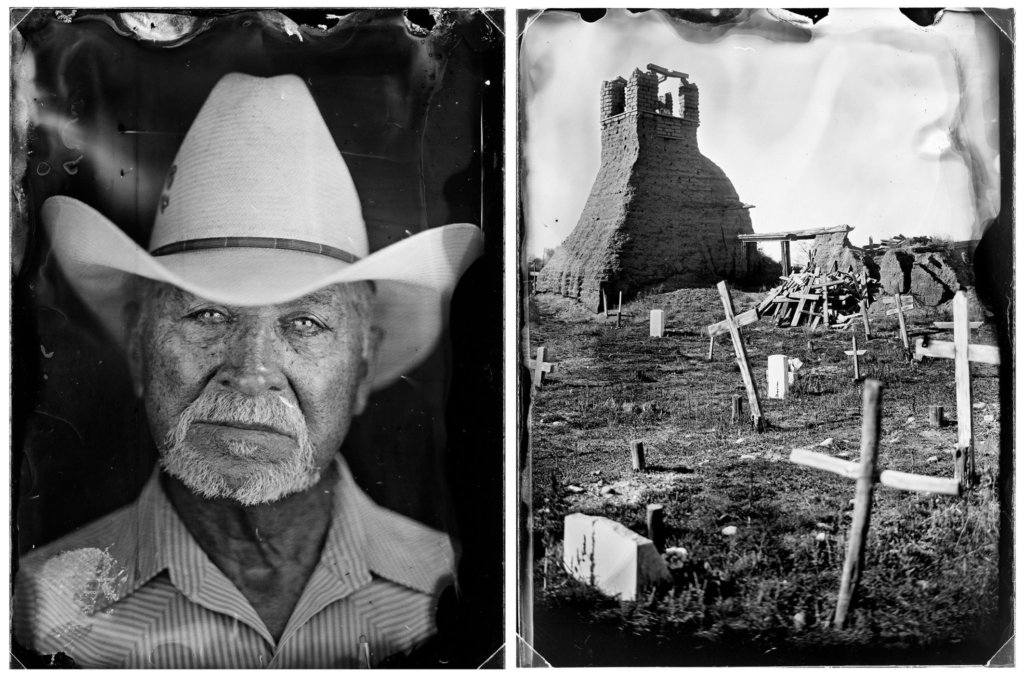
Anastasio Bonnie Sanchez
…
San Geronimo church massacre site
In 1847, US troops attacked this church in Taos Pueblo, killing 150 Hispanic and indigenous people seeking refuge inside.
. . . . .
Anastasio Bonnie Sanchez and San Geronimo church massacre site, 2017
Diptych gelatin silver prints
40 × 30 cm each (16 x 12 inches each) mounted combined size 60 x 40 cm (32 x 24 inches)